Is San Antonio’s Housing Market Cooling?
Inventory is increasing as we head back toward a pre-pandemic housing market.

Over the past two years, home price appreciation increased rapidly due to an influx of buyer demand, artificially low interest rates, and historically low inventory. Years of underbuilding combined with sellers who held off on listing their homes due to the pandemic (or out of fear they wouldn’t have a home to move to) amplified these conditions.
This level of record-high demand and record-low supply wasn’t sustainable.
Now, the rapid increases in mortgage interest rates are cooling demand. The San Antonio housing market is moderating from a strong seller’s market to one that is more balanced.
The San Antonio Board of REALTOR®’s May market report shows that the San Antonio market is shifting back to the market pace seen in the years leading up to the pandemic.
- New listings increased 10% to 4,621 listings compared to May 2021 and increased 8% as compared to April 2022
- Active listings increased 26% to 6,029 listings as compared to May 2021 and increased 25% as compared to April 2022
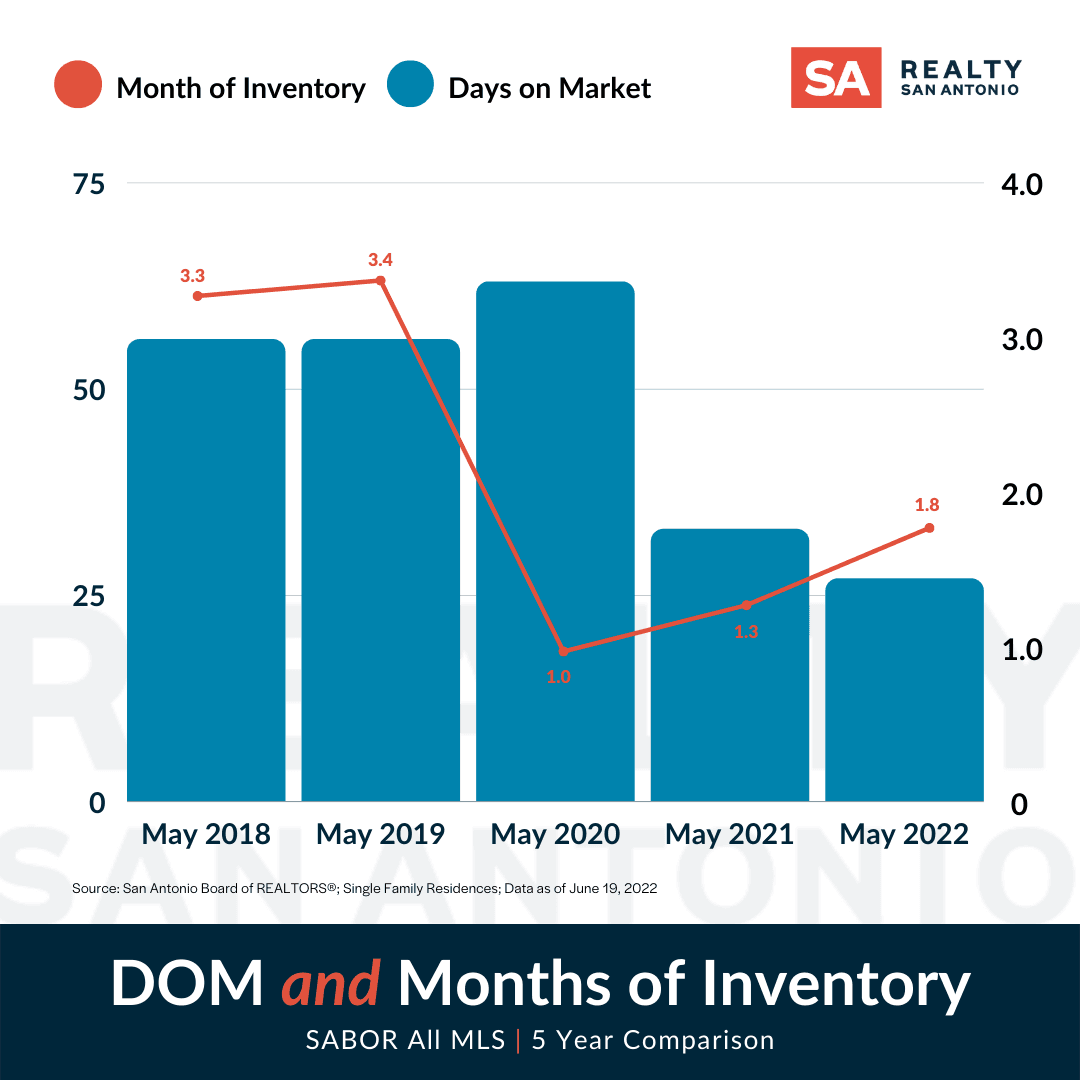
- Increase in the months of inventory to 1.8, compared to 1.28 a year ago and 1.2 in April 2022.
- Pending sales declined 6% to 3,295 transactions as compared to May 2021
- Home sales declined 2% year over year to 3,580 as compared to May 2021
- The median sales price rose to $348,000, up 24% compared May of 2021
- Homes still sold quickly and spent an average of 27 days on the market, seven days less than May of 2021
A year-over-year comparison to the frenetic housing market of 2021 can be a little misleading. One of the best ways to make informed decisions in a shifting market, in addition to working with an experienced local agent, is to look at the most current data and compare it to where the market has been.
Is the San Antonio housing market resetting?
Yes. The past two years were record-breaking in every way. Now, we're transitioning toward a more typical pre-pandemic market. The rapid increase in interest rates is moving us there quickly.
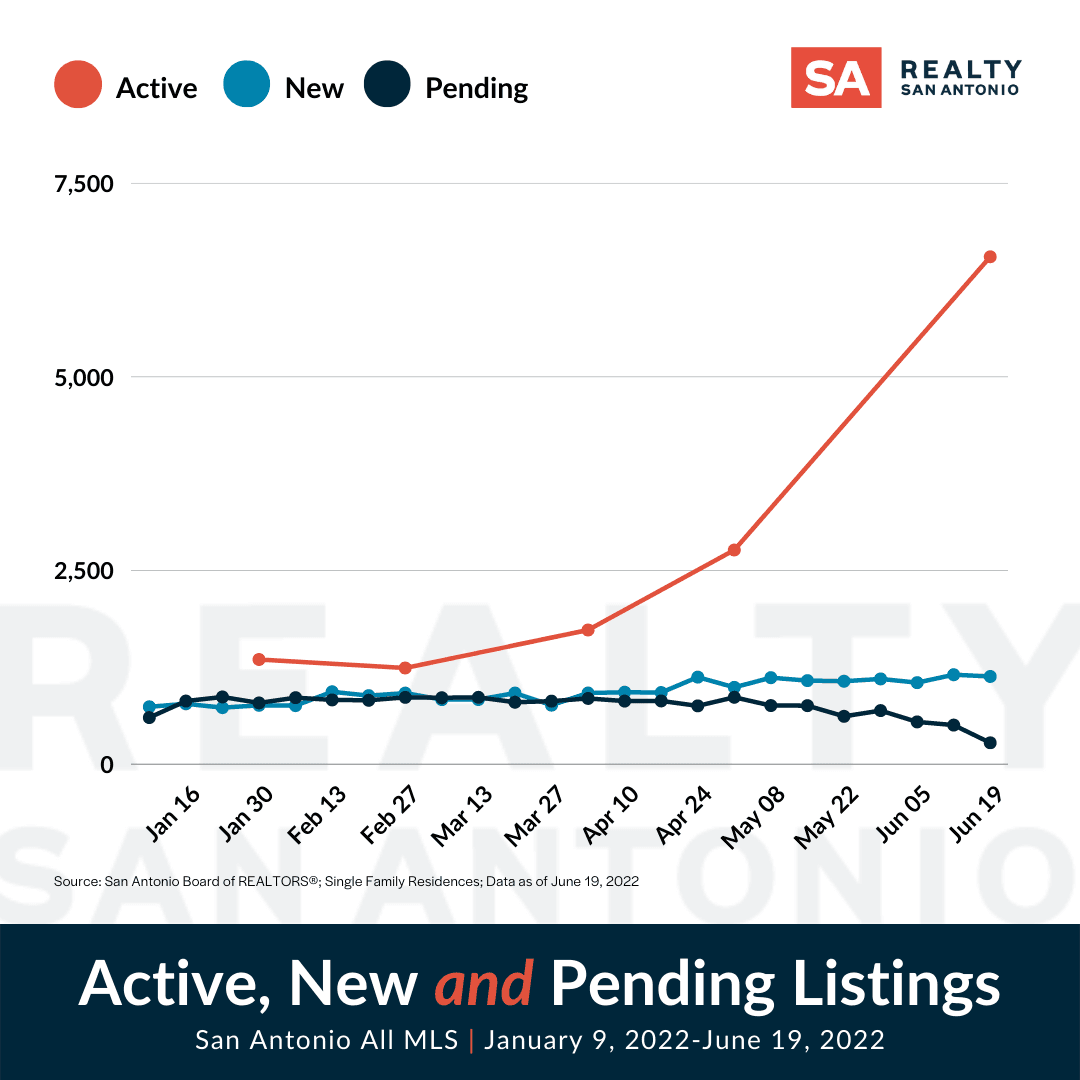
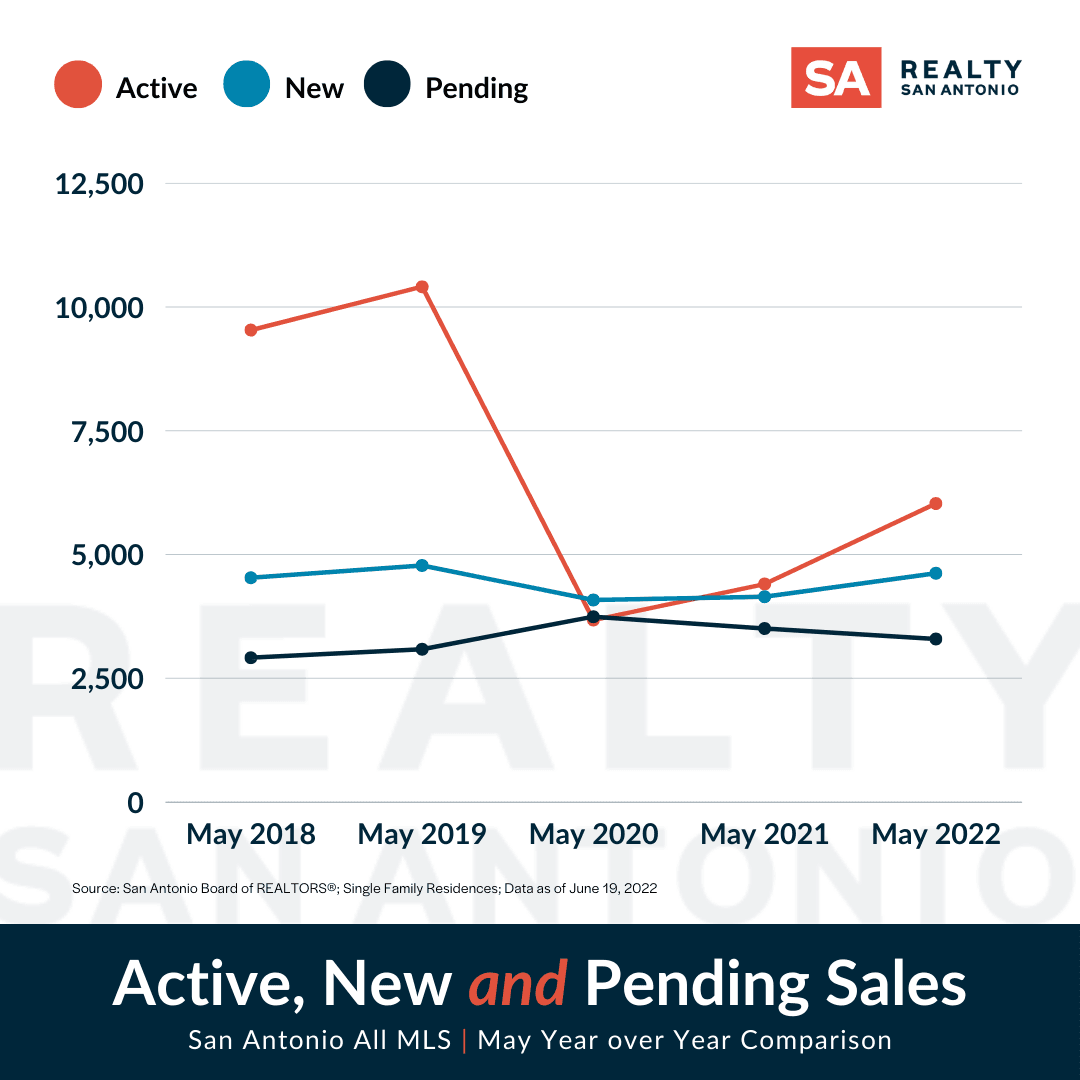
Active inventory (supply) is ticking up as demand cools, but it is still historically low. We’re seeing the number of active listings increase at a fast pace, but would you believe they are still lower than they were in 2018 and 2019? It’s true.
- In May 2018, there were 9,531 active listings in San Antonio.
- In May 2019, there were 10,409 active listings.
The reason active listings for May 2022 (6,029) seems high is that 2020 and 2021 were very unusual years for the San Antonio housing market. We had only 3,675 active listings in May 2020 and 4,403 in May 2021.
“This increase in inventory is good news for buyers who have felt the strain of limited options in the past two years,” says Realty San Antonio Head of Sales Jolene Weinstein. “With homes still selling quickly, working with an experienced agent is the best way to ensure you can keep up with potential opportunities.”
Will home prices depreciate?
Fortune reported that on a national level, the cooling housing market is decelerating. Deceleration is when home prices continue to appreciate, but at a slower pace. Potential buyers should know that experts forecast price deceleration, not depreciation. In San Antonio, home prices are still increasing, and home price appreciation actually increased slightly to 24% in the month of May, so we are not seeing a deceleration yet.
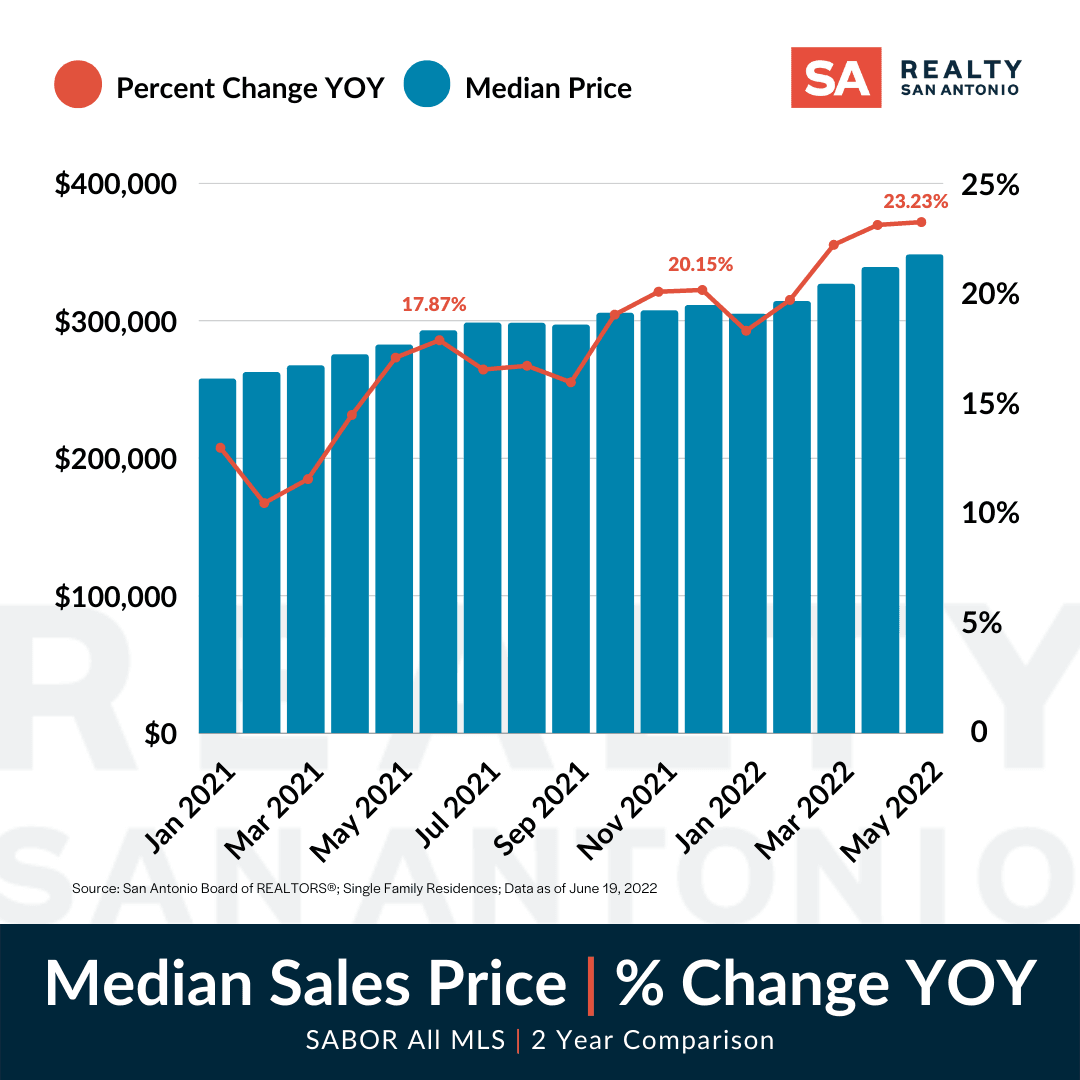
If you’re thinking about buying a home in San Antonio, you may worry that you’ll see the value of your home drop. From this time last year, there has been a 24% increase in median prices. This rate of appreciation is expected to slow as demand cools with the surge in interest rate hikes. These appreciation levels are much higher than in the years leading up to the pandemic, and they aren’t sustainable.
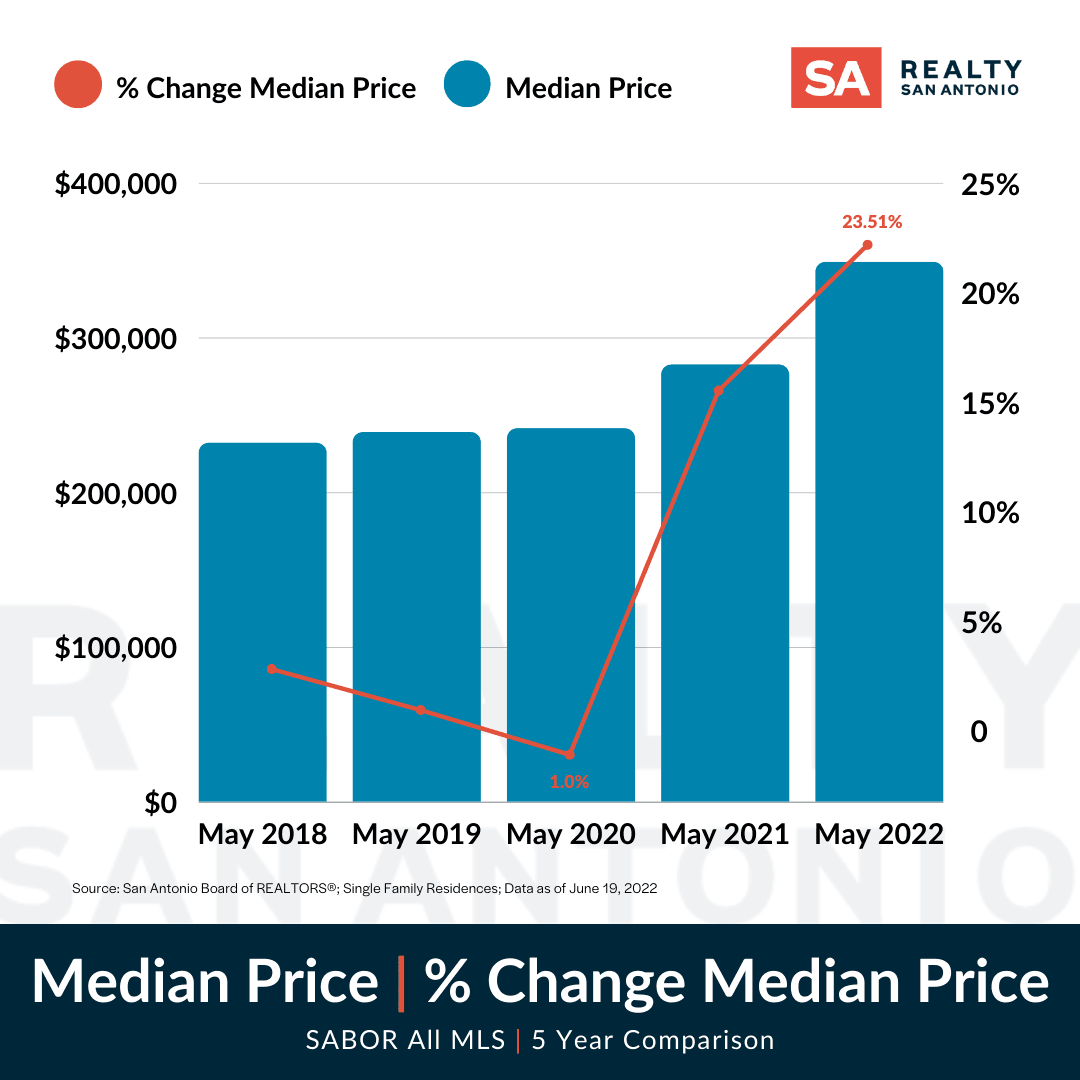
All of this doesn’t mean homes will necessarily lose value. Mark Fleming, Chief Economist at First American, says, “In today’s housing market, demand for homes continues to outpace supply, which is keeping the pressure on house prices, so don’t expect house prices to decline.” He continues, “More often than not, house price appreciation has been resistant to rising mortgage rates.”
Additionally, Chairman Jerome Powell spoke on the impact of the Fed raising benchmark interest rates three-quarters of a percentage point on the housing market and noted that mortgage rates were recently artificially low due to the pandemic. Powell says, “It is still a very tight market, so prices may continue to go up even in a world where rates may go up.”
Will there be more price reductions in San Antonio?
Inman News reported that “the seller's iron grip loosens as bidding wars ease, and price cuts rise.” The number of price reductions in San Antonio are slowly increasing, and bidding wars are becoming less common. Both of these are signs that a decline in home demand is beginning to shift the balance of power back from sellers. Further, these show that the housing market isn’t crashing, but instead is coming back down from an unsustainable period.
As the market cools, sellers will want to take advantage of the current demand before interest rates rise further. Working with an experienced agent will help you price your home appropriately so you sell it quickly without leaving money on the table or needing to drop the price.
How does a shifting market impact me if I want to buy a house?
As pending sales cool demand and more listings come on the market, the active inventory supply is building. This increase in inventory creates more favorable conditions and options for buyers.
The changes in interest rates may have you wondering how much house you can afford and if you should wait for rates to lower. If your decline in purchasing power as a result of the increase in rates has you putting a pause on your search, you will likely pay a little more for a home once you regroup. But you may have more certainty once you are ready to move forward.
If you’re not priced out of the market, you may want to consider acting now in order to get in the game and begin building equity. Bloomberg reports that experts consider owning a home a good hedge against inflation. Housing is an asset that tends to increase in value. In San Antonio, home values have increased in 18 of the last 20 years. Additionally, your mortgage is a way to protect yourself from rising rents and helps stabilize your monthly housing costs.
If you are deciding between renting and buying there are a number of factors you should consider.
How does a shifting market impact me if I want to sell my house?
If you're a seller, you should know that the market is still strong. However, sellers may need to adjust your expectations. It’s likely that you will not see the intense bidding wars of the past two years, but homes are still selling over the asking price on average.
According to Altos Research, despite the consistent decrease in Market Action Index (MAI), we’re still in a seller’s market where significant demand leaves little inventory available. If the MAI begins to climb, prices will likely follow suit. If the MAI drops or falls into the buyer’s zone, watch for downward pressure on prices. The San Antonio market has a long way to go before the tide turns.
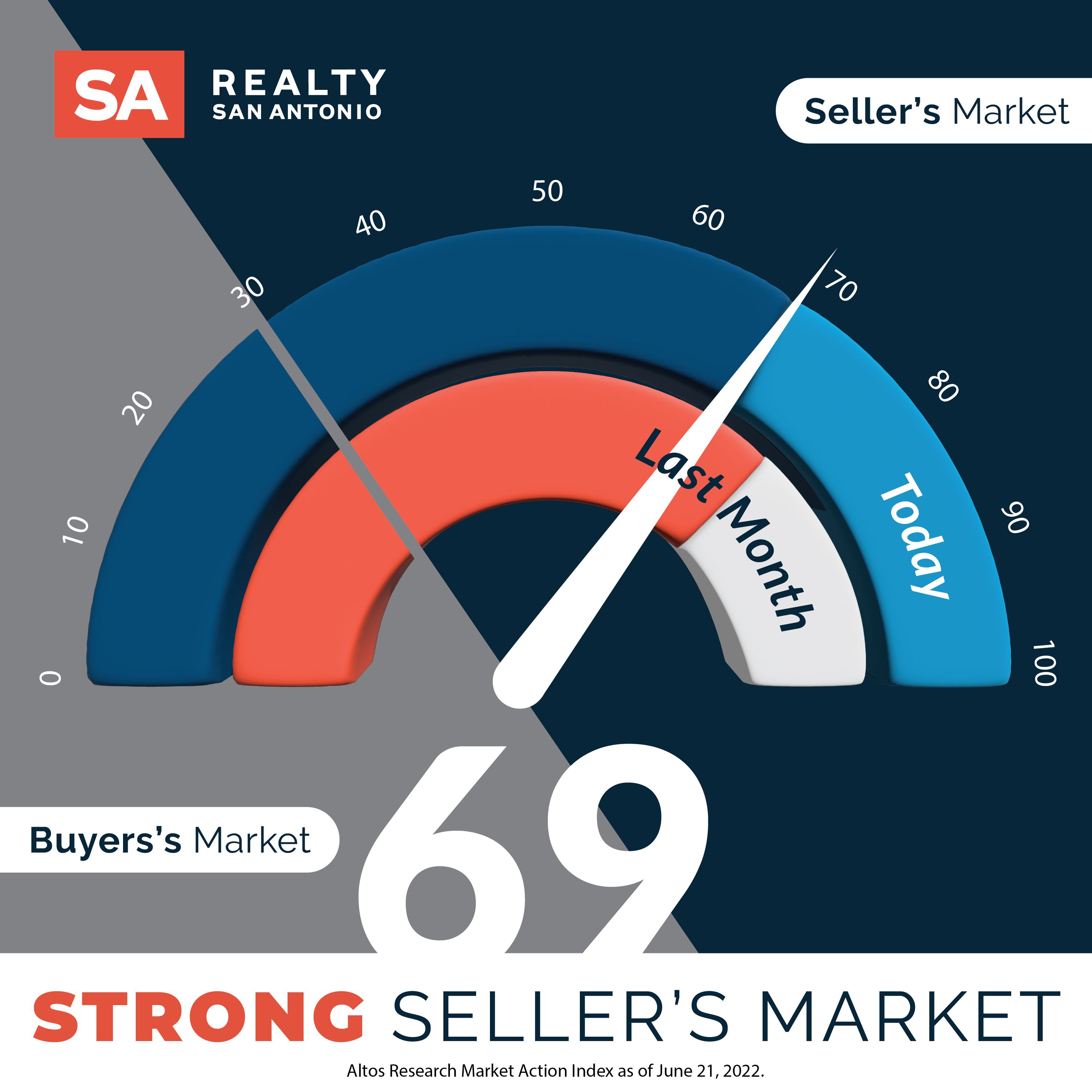
Sellers will have to be realistic about pricing now that buyers have more options. Working with an experienced agent to price your home correctly will lower the likelihood that you will price too high and scare off buyers, leading to the need to reduce the price of your home.
Sellers can also benefit from an increase in inventory. If you’ve been looking to move up or down in home size or even relocate, you’ll have more options.
What is happening with interest rates?
In May and into June, the Fed raised its benchmark interest rate in an attempt to combat inflation. Rates on 30-year fixed mortgages aren’t tied to the Fed rate, but they are tied to the behavior of 10-year Treasury bonds. These bonds are influenced by inflation, interest rate risk, and the level of confidence that investors have in the economy as a whole.
As a result, rates on 30-year fixed-rate mortgages climbed to an average of 6.10% as of June 17, according to Forbes. In comparison, the average rate was 2.93% percent in June 2021. It’s important to note that this rate has been higher historically. According to The Mortgage Reports, between April 1971 and June 2022, 30-year mortgage rates averaged 7.77%.
Experts at Realtor.com anticipate that home prices and mortgage rates will both continue to rise, meaning that waiting to buy could cost you more. As these factors begin to cool San Antonio’s housing market, prospective buyers will find an increase in inventory. According to the San Antonio Board of REALTORS® May 2022 data, the number of active listings compared to May 2021 increased by 26%.
What role does the local economy play in the housing market?
According to the San Antonio Report, San Antonio added more residents than any other US city from 2020 to 2021. The demand for homes is strong as more people relocate to the Alamo City. San Antonio’s population growth has been steadily increasing since 2010, and the city has added more than 100,000 residents since then.
The San Antonio economy is still strong and unemployment remains low—it was at 3.3% in April, compared to 5.4% last year, according to Ycharts. According to Mashvisor, experts believe that the job market is a good indicator of the housing market’s success in that as unemployment rises, the market falls. A strong economy drawing more people to the city bodes well for San Antonio’s housing market.
As always, real estate is hyper-local and hyper-situational. No matter where you are in the home buying or selling journey, the best way to make informed decisions in a shifting market is to work with an experienced local agent and look at the most current local market data. As Central Texas’ #1 independent real estate brokerage, we are constantly studying market trends to help our clients make informed decisions, build their wealth, and prosper in the future.
Related Articles
to Top